Dachshund Grooming: Smooth, Long and Wire Coats Explained
There is no single Dachshund grooming routine. A smooth coat, a long silky coat and a wire coat may belong to the same breed, but they do not need the same tools or the same finish. Identify the coat first, then build a routine around what it actually needs.
Three coats, three approaches. Smooth coats need gentle loose-hair care; long coats need feathering checks; wire coats need a considered decision about maintaining their texture.
Start with the correct coat type
The AKC Dachshund profile distinguishes the three varieties and their grooming requirements. Size does not decide the routine: miniature and standard Dachshunds can have any of these coats.
- Smooth: short, close hair with little furnishing. Use a gentle mitt or appropriate soft brush.
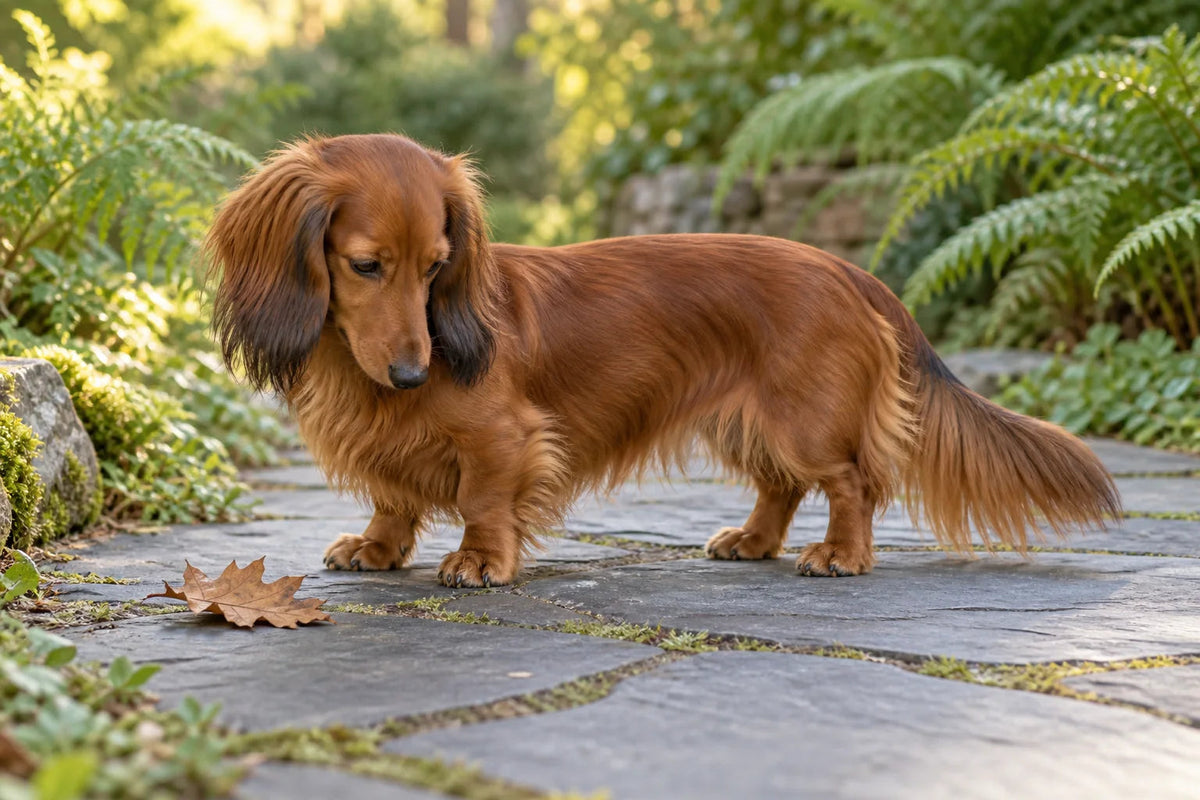
- Long-haired: longer hair on the ears, underside, legs and tail. Check those areas for tangles rather than brushing only the back.
- Wire-haired: a harsher outer coat with beard and eyebrows. Hand-stripping and clipping are different grooming choices.
The AKC's Dachshund care overview also notes that long and wire coats need more regular attention than smooth ones. A photograph of another Dachshund is therefore not enough to choose a haircut for yours.
Keep a low dog comfortably supported
Use a stable non-slip surface at a height you can manage safely. If lifting is necessary, support the chest and hindquarters together. Do not leave the dog perched on a table edge or expect them to jump down when you finish.
To inspect the belly or feet, ask for a comfortable position rather than stretching the legs or twisting the body. Work in short sessions and reward cooperation. If you cannot reach an area safely, get a groomer to demonstrate a better setup.
Arrange your brush, comb and towels before bringing the dog over. Reaching across a slippery surface for a forgotten tool is an avoidable complication.
For smooth coats: light pressure is enough
Brush or wipe along the direction of hair growth, starting where the dog enjoys touch. Clear loose hair from the tool and use very gentle pressure on the belly and legs. A short coat is not a reason to scrape close to the skin.
After a muddy walk, check the chest, underside and feet. Because the body is low to the ground, those areas may need cleaning even when the back looks spotless. Local rinsing and drying may be sufficient.
Routine body clipping adds no useful step to this coat-care plan. The aim is a clean, comfortable natural surface, not an even shorter finish.
For long coats: separate the feathering
Part the longer hair into small sections. Work gently through loose tangles from the ends, then move closer to the roots only as the hair becomes free. Give the ear fringes, armpits, belly and underside of the tail their own checks.
A VUNRO coarse-and-fine comb can check these smaller areas after brushing. Start with wider teeth. If it catches, stop and find the snag instead of pulling through it.
Do not push scissors beneath mats. Skin can be drawn into a tight knot. A groomer can deal with difficult areas and advise on a modest practical tidy if feathering repeatedly collects dirt. That does not require shaving the whole body.
For wire coats: discuss texture before booking
Hand-stripping removes selected mature outer hairs; clipping cuts them shorter. They are not interchangeable methods for preserving a harsh jacket. Ask a groomer experienced with wire-haired Dachshunds what the current coat can comfortably support.
Some pet owners choose a clipped finish for maintenance reasons. The appearance and texture can differ from a stripped coat, so agree on the trade-off before work starts. Do not attempt to pull hair simply because a timetable says stripping is due.
At home, gently brush and comb the furnishings and keep the beard clean after food or water. Detailed eyebrow, lip and foot shaping is best demonstrated in person because the skin and moving parts are close.
Wash the coat you have, then dry it properly
Before bathing, remove loose debris and address manageable tangles; tight mats need help first. Use dog shampoo according to the label, comfortable water and a non-slip surface. Keep direct spray away from the face and ears.
Rinse the underside thoroughly, then press dry with towels. Longer ear hair and belly feathering need particular attention. If using a dog dryer, keep airflow comfortable and moving, and supervise throughout.
Blue Cross's bathing advice supports adjusting frequency to the individual coat and lifestyle. Cleaning a muddy underside does not always mean washing the whole dog.
Check the feet on all three varieties
Nails need regular inspection whatever the coat type. Include dewclaws and ask a groomer to show you a safe trimming margin. Keep the foot in a natural position and take breaks rather than wrestling through the entire set.
The VUNRO nail grinder can offer gradual smoothing for a dog comfortable with the sound. Keep long hair clear, make brief contacts and stop well before the sensitive quick. If you are uncertain about the amount to remove, professional help is the better next step.
A good Dachshund groom leaves the correct coat cared for, the underside clean and dry, and the dog comfortable throughout.
Keep learning
More from the Blade Blog
Whippet Grooming: Gentle Coat Care and Comfortable Nails
Read the guide →
Chihuahua Grooming: Smooth Coats, Long Coats and Tiny Paws
Read the guide →